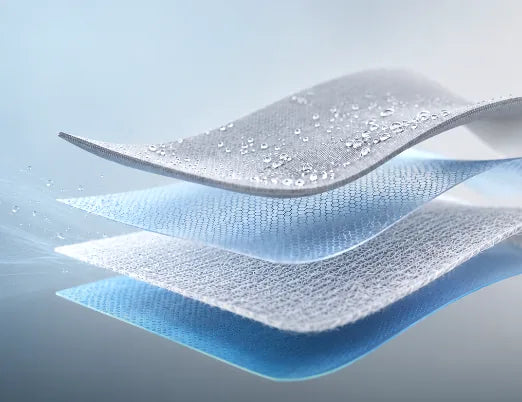
The evolution of cooling comfort
Cooling comfort began as a description of the temperature difference felt when textiles touch the skin.
Traditional cool-touch claims were often short-lived and inconsistent, without a shared definition, test method, or reproducible data.
As functional fibers and textile-structure processes developed, cooling comfort entered the textile field as a way to describe the temperature difference perceived at first contact.
For a long period, however, many cooling-fabric claims stayed close to sensory promotion and short-lived experience. Instant cool touch created by simple coating or additives was often generalized into a long-term effect, without a unified technical definition, testing method, or reproducible data behind it.
For people who are sensitive to body sensation, fragile sleep, or environmental changes, this kind of cooling may only work within a short time window. It is difficult for it to maintain a stable and predictable comfort state across an entire sleep cycle or extended wear duration.
- Initial heat
- Contact cooling
- Heat returns
- Heat accumulates
- Heat builds up
- Initial heat
- Contact cooling
- Heat is dispersed
- Microclimate stabilizes
- Cooling remains stable